
Scaling Single‑Use Bioreactors & Facilities
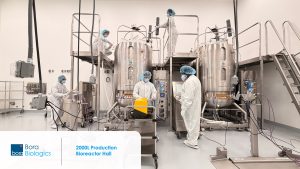 Execution at Commercial Scale
Single‑use technologies have reshaped biologics manufacturing. They offer flexibility, speed of deployment, and reduced changeover complexity — advantages that are especially valuable in early development and multi-product environments.
But scaling single‑use bioreactors and facilities for late‑stage and commercial manufacturing is not simply a matter of installing more bioreactors.
True scale requires systems maturity.
As programs transition into Phase III and commercial supply, the risk profile changes. Production volumes increase. Process variability narrows. Regulatory scrutiny intensifies. Supply commitments become binding. At this stage, the conversation shifts from flexibility to durability.
Scaling Beyond Equipment
Increasing bioreactor capacity — whether from 50L to 2000L single‑use systems — is only one dimension of scale. Commercial readiness demands alignment across:
- Facility design and material flow
- Utility robustness and redundancy
- Quality systems and change control governance
- Process characterization and validation strategy
- Supply chain security for single‑use components
- Cross‑functional execution discipline
Single‑use facilities must be engineered not just for agility, but for repeatability.
The most common misconception is that single‑use inherently simplifies scale. In reality, as working volumes increase, so do expectations for data integrity, extractables and leachables control, vendor qualification, and long‑term component availability. Commercial success depends on proactively managing these variables — not reacting to them.
The Commercial Inflection Point
In late‑stage manufacturing, scale amplifies both complexity and responsibility.
- Minor process variability can become yield‑impacting
- Supplier inconsistency can threaten timelines
- Change management becomes highly visible under regulatory review
- Tech transfer precision determines PPQ outcomes
At the same time, commercial success introduces a different pressure: the ability to scale out quickly and reliably as market demand increases.
Speed may accelerate development, but only disciplined execution sustains commercial supply — especially when production volumes must expand without compromising compliance, quality, or continuity.
Scaling single‑use platforms successfully requires integrating process development, manufacturing science, quality assurance, and regulatory strategy into a unified operational framework. Facilities must be designed not only for validation and inspection readiness, but also for modular expansion and demand responsiveness — with governance strong enough to support growth without operational drift.
Engineering for Long-Term Durability
Commercial‑stage single‑use facilities should demonstrate:
- Robust validation strategy (including PPQ alignment)
- Redundant critical utilities and environmental controls
- Strong vendor qualification programs
- Forward‑looking lifecycle management of disposable components
- Documented comparability and change management pathways
These are not optional safeguards — they are foundational to sustained market supply.
From Capacity to Capability
Capacity expansion is visible.
Operational maturity is measurable.
At Bora Biologics, scaling single‑use infrastructure is approached as a systems challenge, not an equipment upgrade. Facility expansion, bioreactor scaling, and quality governance are developed in parallel to ensure that increased capacity translates into dependable commercial execution.
Because in biologics manufacturing, the true test of scale is not volume.
It is consistency under scrutiny.
Start a Commercialization Discussion
Now Operational: 2000L Single-Use Commercial Capacity in the U.S.
Bora Biologics’ expanded 2000L single-use capabilities support late-stage development and commercial GMP manufacturing in our San Diego FDA registered facility.