
Advancing Biologics Tech Transfer: Operational Discipline for Late-Stage and Commercial Programs
Introduction
For Phase III and commercial biologics programs, technology transfer is a high‑risk inflection point. Process variability that is manageable at pilot scale can become supply‑critical at commercial scale. Decisions made during transfer directly influence validation success, inspection readiness, and long‑term cost of goods.
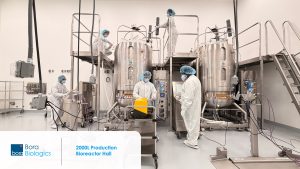
At Bora Biologics’ San Diego cGMP facility, tech transfer is executed across mammalian and microbial platforms. Mammalian manufacturing spans 500L through 5,000L, while microbial production is supported by 150L stainless steel and single‑use fermentation systems for clinical and select commercial programs. Transfer is structured as a formal, risk‑managed engineering program — not an administrative exercise — integrating process characterization, facility fit analysis, analytical control strategy alignment, and validation readiness planning.
The objective is not process replication — but performance predictability at commercial scale.
Defining Biologics Technology Transfer at Commercial Scale
For mammalian systems operating from 500L through 5,000L single‑use bioreactors, and microbial systems supported by 150L stainless steel and single‑use fermentation, technology transfer is structured to preserve process integrity while preparing for late‑stage and commercial execution.
Tech transfer at Bora Biologics includes:
- Client-specific Master and Working Cell Bank (MCB/WCB) creation, stability, and passage characterization
- CPP identification and parameter mapping aligned to commercial-scale geometry
- Oxygen transfer and mixing characterization for scale-up robustness
- Downstream purification scalability, resin lifetime strategy, and column packing control
- Engineering batches structured as a controlled bridge between scale-up and PPQ execution
- Analytical method transfer with cross-site comparability protocols
- Raw material equivalency assessment and supplier qualification
- Equipment and automation comparability aligned to submission data
- Facility fit assessment within qualified cleanroom classifications
At commercial scale, equipment geometry, automation configuration, and utility performance directly influence process reproducibility. Therefore, facility integration is assessed early in the transfer lifecycle.
Bora Biologics Tech Transfer Framework
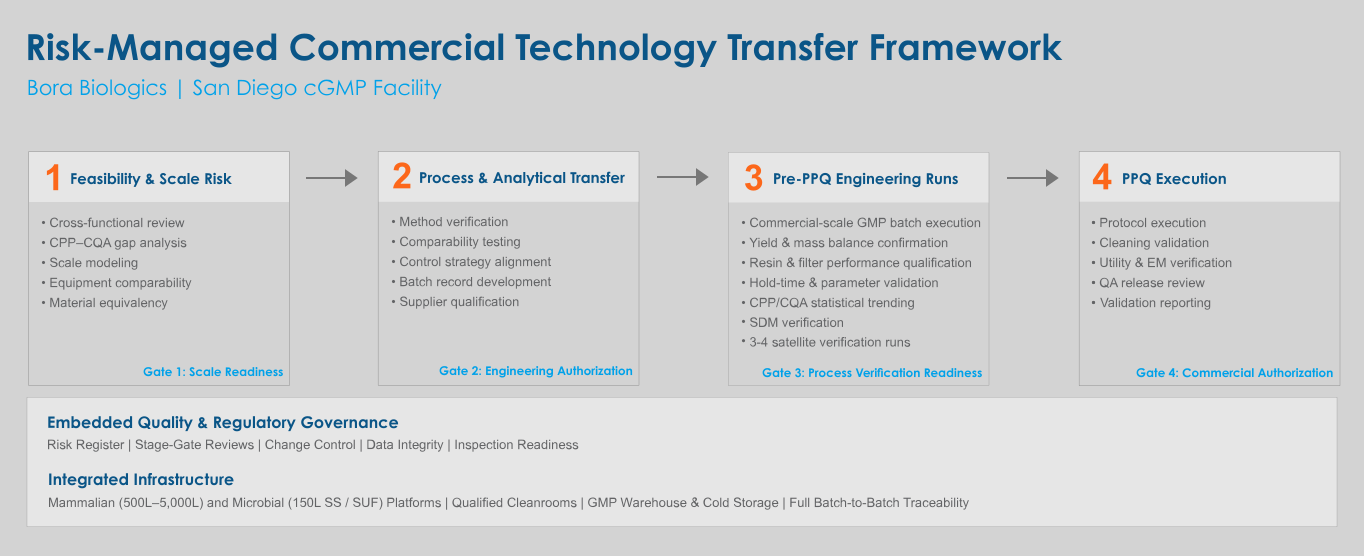
1. Structured Feasibility & Commercial Scale Risk Assessment
Each program entering the San Diego site undergoes a cross‑functional feasibility assessment involving:
- MSAT
- Process development
- Manufacturing
- Quality and regulatory
- Engineering and facilities
- Supply chain
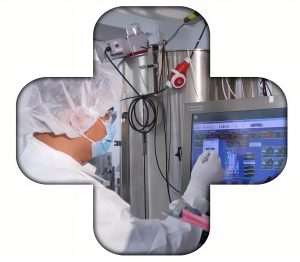
For mammalian programs spanning 500L through 5,000L single‑use bioreactors, and microbial programs supported by 150L stainless steel and single‑use fermentation, risk modeling includes:
- Scale factor modeling for mixing and oxygen transfer coefficients
- Shear sensitivity evaluation for mammalian systems
- Bioreactor control system comparability
- Resin throughput modeling aligned to commercial campaign volumes
- Hold-time capability within qualified cleanroom environments
- Media and raw material equivalency verification
Engineering batch strategy is defined during feasibility to confirm reproducibility at target commercial scale prior to PPQ initiation.
For late-stage programs, regulatory impact assessments (including change classification and comparability risk) are evaluated before execution to avoid submission delays.
2. Analytical Method Transfer & Control Strategy Verification
Robust analytical method transfer enables validation success.
At Bora Biologics, method transfer within the San Diego cGMP laboratories includes:
- Method suitability assessments under site-specific instrumentation
- Co-validation or partial validation where required
- Side-by-side comparability testing
- Stability-indicating method confirmation
- Trending of release and in-process data during engineering campaigns
Control strategy alignment ensures:
- Defined CQAs remain within validated ranges at 1,000–5,000L scale
- Process capability indices support commercial reproducibility
- Trending systems are active before PPQ execution
Data integrity, real-time data trending, and documentation controls are embedded across laboratory and manufacturing systems to support proactive oversight and inspection readiness.

3. Pre‑PPQ Engineering Runs & Process Verification Readiness
Engineering batches serve as a formal bridge between scale transfer and PPQ.
For mammalian (500L–5,000L) and microbial (150L SS / SUF) platforms, engineering campaigns confirm:
- Process reproducibility at commercial bioreactor scale
- Chromatography step yields and impurity clearance
- Resin performance across campaign cycles
- Filter capacity and fouling risk
- Defined hold times within validated facility conditions
- Batch record clarity and operator consistency
Prior to PPQ, the site ensures:
- Qualified utilities supporting commercial throughput
- Validated cleaning processes
- Established environmental monitoring baselines
- Controlled raw material release pathways
- Campaign-aligned material staging within GMP warehouse infrastructure
Tech transfer closure criteria are defined statistically — not operationally — requiring reproducibility metrics to meet predefined acceptance thresholds before validation progression.
4. Integrated Materials & Supply Chain Readiness
Commercial tech transfer risk frequently resides outside the bioreactor.
The San Diego site integrates:
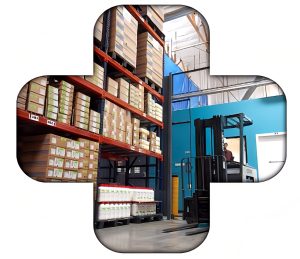 Dedicated GMP warehouse infrastructure
- Controlled material quarantine, QA disposition, and electronic status management
- Status segregation (Quarantine | Released | Rejected)
- Environmental monitoring across ambient, refrigerated, and frozen storage zones
- Campaign-specific staging to support uninterrupted commercial manufacture
Full batch-to-batch traceability supports validation consistency, regulatory defensibility, and inspection readiness.
This integration reduces supply-driven risk during PPQ and commercial launch campaigns.
5. Regulatory & Inspection Alignment
Documentation generated during transfer is structured to directly support:
- CMC comparability studies
- Validation master plans
- PPQ protocols and reports
- Stability studies
- Change control traceability
Quality systems at the San Diego campus are structured for lifecycle inspection readiness. Regulatory alignment is continuously evaluated to ensure that commercial execution matches submission strategy and post-approval commitments.
Workforce & Technical Governance
Tech transfer at commercial scale requires disciplined coordination.
Bora Biologics deploys:
- Dedicated program management leads
- MSAT oversight through PPQ completion
- Formal stage-gate governance checkpoints
- Documented risk registers with mitigation tracking
- Defined escalation pathways for technical or compliance deviations
This governance model ensures issues are resolved during engineering stages — not during validation or inspection.
Conclusion
For late‑stage biologics programs, the objective of technology transfer is not successful first lot manufactured, but robust and sustainable reproducibility at commercial scale.
A robust transfer must deliver:
- Scalable process control
- Demonstrated statistical reproducibility
- Regulatory defensibility
- Inspection-ready documentation
- Supply continuity
At Bora Biologics, tech transfer across mammalian (500L–5,000L) and microbial (150L SS /SUF) platforms is executed as a data-driven, risk-managed commercial program designed to protect validation timelines and support reliable long-term supply.
Because at commercial scale, variability is expensive.
And predictability is performance.
Start a Commercialization Discussion
2000L Single-Use Commercial Capacity in the U.S.
Bora Biologics’ expanded 2000L single-use capabilities support late-stage development and commercial GMP manufacturing in our San Diego FDA registered facility.