When the Molecule Is Not Standard: Scaling Complex Recombinant Proteins for Commercial Supply
 A molecule can perform exactly as intended—and still face a difficult path to commercial supply.
For a complex recombinant protein, demonstrating biological activity is only part of the challenge. The next question is whether that activity can be delivered consistently, at the required scale, and at a cost that supports the product’s intended market.
The molecule may be exceptional. Its manufacturing process must be dependable.
That requires more than increasing bioreactor volume. It requires understanding where the molecule challenges conventional approaches—and building those insights into development, analytics, purification, and supply planning.
A Platform Is a Starting Point, Not the Entire Answer
Established platforms provide valuable development tools. But complex recombinant proteins can require adjustments that go beyond familiar platform assumptions. Structural heterogeneity, fragmentation, aggregation, and other molecular attributes can create analytical and formulation challenges that demand molecule-specific approaches. Bora Biologics’ published analytical and formulation insights emphasize the importance of tailored characterization rather than assuming methods will transfer unchanged between molecular formats.
The strategic question is not whether to use a platform.
It is:
Where does the platform fit—and where does the molecule require a different answer?
For sponsors, that distinction should shape early technical discussions. A credible manufacturing strategy should explain not only which established tools will be used, but also how the team will recognize and address the exceptions.
More Protein is Not Necessarily More Product
Q-Sera’s RAPClot™ program illustrates why expression alone does not define manufacturing success.
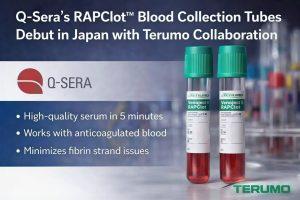
RAPClot is recombinant ecarin, an enzyme used in a proprietary blood collection tube coating to support rapid serum production. Its manufacture involves an additional technical consideration: the protein is initially expressed as a larger precursor that must undergo cleavage to become active. Increasing expression was therefore only one part of the development challenge. (boracdmo.com)
This changes the commercial conversation.
Rather than asking only, “How much protein can the cells produce?”, sponsors should also ask:
- How much usable, active product is recovered?
- Which processing steps create the greatest losses?
- Can the analytical strategy distinguish quantity from functional performance?
- Does the resulting process support the economics of the intended application?
The most useful productivity measure is the one connected to the product customers actually need.
 The RAPClot Example: Solving Across the Process
Q-Sera approached Bora Biologics because the original production yield was too low to support a commercially viable alternative to existing blood collection tubes. The product needed a manufacturing approach that could support competitive unit economics—not simply demonstrate technical feasibility.
Our published cell line development case study describes an integrated approach:
- Cell line and culture optimization: A fivefold productivity improvement.
- Activation optimization: An additional reported yield improvement of 10–15%.
- Downstream simplification: Fewer intermediate ultrafiltration/diafiltration steps.
- Purification redesign: A reduction from three chromatography columns to two, with improved purity. (borabiologics.com)
The significance is not any single improvement. It is the connection between them.
Rather than treating low yield as an upstream problem alone, the team addressed expression, activation, recovery, and purification together.
Q-Sera subsequently reported that it and Bora Biologics had scaled RAPClot to enable commercial-scale manufacture. This is a diagnostic and medical-device application, rather than a therapeutic approval case—but it demonstrates the value of solving molecule-specific challenges with commercial requirements in view.
Analytics Must Help Explain the Process
For complex proteins, analytical development should do more than confirm the final result. It should help teams understand why the process produces that result.
Bora’s analytical approach emphasizes structural and functional characterization, supported by sensitive, orthogonal methods. This is particularly relevant when one measurement cannot fully describe a molecule’s quality or performance. (borabiologics.com)
For sponsors, useful development questions include:
- Can the methods distinguish a process improvement from a change in product quality?
- Are samples assessed at the steps where important changes may occur?
- Can functional results be connected to structural findings?
- Will the methods support decisions during transfer and subsequent manufacturing?
If a process change improves yield, the next question should be: yield of what?
That question keeps optimization connected to product performance rather than a single headline metric.
 Commercial Fit Should Shape Development Priorities
RAPClot’s original challenge was explicitly commercial: production costs had to make sense for its intended use.
That makes it a useful starting point for broader sponsor discussions. Before committing to a scale-up strategy, teams should define:
- The supply requirement: How much product is needed initially, and under different demand scenarios?
- The economic requirement: What manufacturing cost can the intended application support?
- The technical requirement: Which attributes and process steps need the most development attention?
- The execution requirement: What must be demonstrated before transferring or expanding production?
The objective should not automatically be the largest batch or the highest expression level.
It should be a manufacturing approach that makes the product commercially practical.
What to Ask a Manufacturing Partner
For a nonstandard molecule, a capabilities list is only the beginning. A productive BD conversation should explore how the partner would approach the actual development problem.
Ask:
- Where might conventional platform assumptions fail for this molecule?
- How will cell line, process, analytical, and formulation teams work together?
- What evidence will guide the choice between further optimization and scale-up?
- How will technical decisions be evaluated against supply needs and cost?
- What would a focused feasibility assessment need to establish?
These questions move the discussion beyond available capacity toward the scientific judgment needed to use that capacity effectively.
Why Bora Biologics
Bora Biologics brings together mammalian and microbial expertise, cell line development, process development, analytical and bioassay capabilities, formulation development, and GMP manufacturing across the development-to-commercial lifecycle.
For complex recombinant proteins, our approach is to connect those disciplines around the molecule and the customer’s commercial objective—not treat each development activity as an isolated handoff.
The RAPClot experience illustrates that approach: use platform strengths where they fit, adapt where the molecule demands it, and evaluate improvements across the process.
Is Your Manufacturing Strategy Built Around Your Molecule?
A nonstandard molecule does not need to fit a standard development script. It needs a clear understanding of its challenges—and a manufacturing strategy designed to address them. Developing a complex recombinant protein, investigating low active-product recovery, or reassessing a process before scale-up?
Connect with Bora Biologics to discuss your molecule, your current technical constraints, and the evidence needed to build a practical path toward commercial supply.